
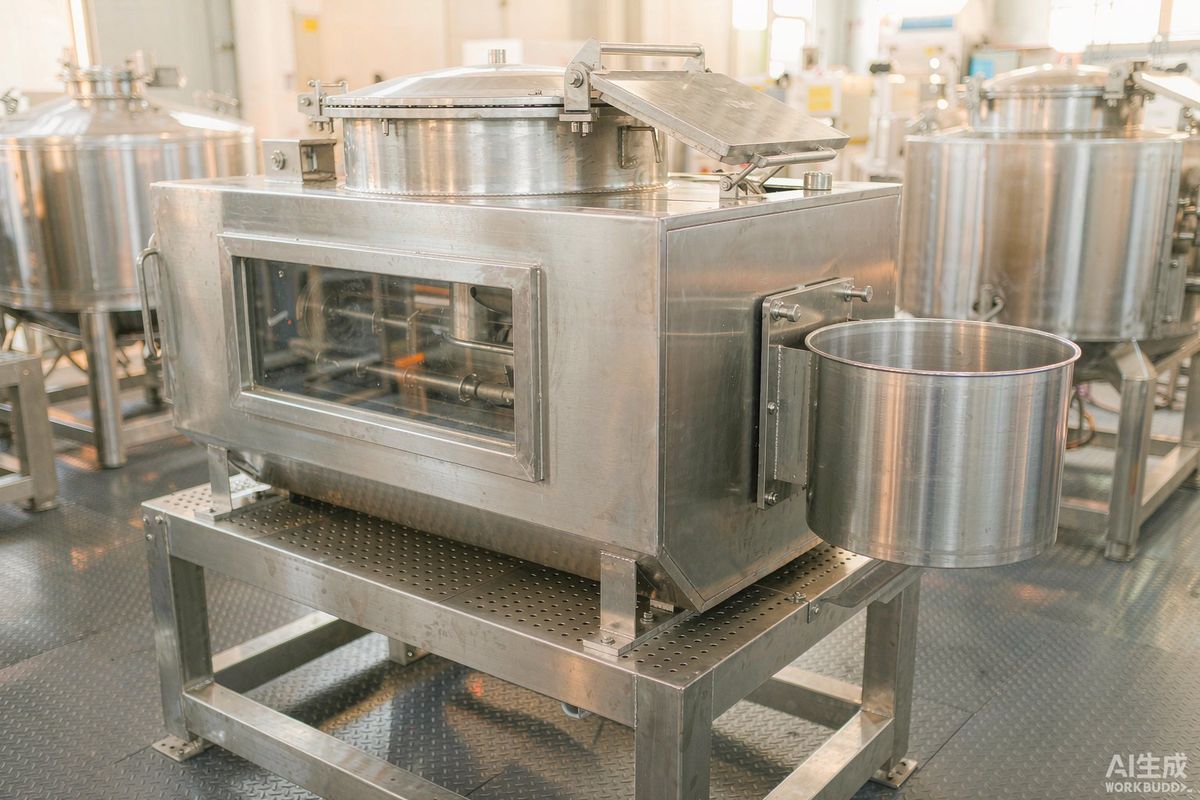
Colombia's paint, printing-ink, coatings and adhesives producers run on a 110–120 V / 220 V, 60 Hz grid and import through Cartagena and Buenaventura. A horizontal bead mill from POLYC MACHINE — founded in 2001, with more than 8,000 grinding systems delivered to 60+ countries — is a CE- and ISO 9001-built, Spanish-documented alternative to premium European lines, backed by a 3-Year Warranty on core grinding components.
Why Colombian Buyers Compare Imported Grinding Lines
Colombia's architectural and industrial coatings, printing-ink and adhesives sectors — plus a growing agrochemical base — need reliable wet grinding without European price premiums. The real selection factors are local-voltage compatibility, Spanish documentation, spare-part speed and commissioning support from a supplier that understands Andean and Caribbean logistics.
Colombia Grid, Voltage and Frequency
Colombia operates at 60 Hz with 110–120 V single-phase and 220 V three-phase in industry. POLYC MACHINE configures motors, variable-frequency drives (VFDs) and control panels to 60 Hz and your site voltage at the order stage, so the high-speed disperser and the mill connect without enclosure rework.
| Parameter | Colombia site typical | POLYC configuration |
|---|---|---|
| Frequency | 60 Hz | 60 Hz drives and motors |
| Single-phase | 110–120 V | Control circuit matched |
| Three-phase | 220 V | Motor nameplate matched |
| Documentation | Spanish expected | Manuals and HMI in Spanish |
Shipping and Ports: Through Cartagena and Buenaventura
Equipment typically arrives at the Port of Cartagena on the Caribbean coast or the Port of Buenaventura on the Pacific, then moves inland by road to Bogotá, Medellín or Cali. POLYC MACHINE packs for ocean freight, supplies HS codes and packing lists, and ships under the incoterms you specify — the same process used across 60+ country deliveries.
Bead Mill Architectures Compared: Disc vs Pin vs Basket
Not every "bead mill" grinds the same way. The architecture decides cooling duty, media size, achievable fineness and changeover time.
| Architecture | Best for | Typical media | Changeover |
|---|---|---|---|
| Disc (horizontal) | Continuous, high-throughput paints, inks, pigments | 0.3–0.8 mm zirconia | Medium |
| Pin / agitator | Hard-to-disperse, high-energy mills | 0.1–0.5 mm zirconia | Medium |
| Basket | Small batches, R&D, frequent colour change | 0.8–1.5 mm zirconia | Fast |
A pin-type bead mill delivers higher specific energy for demanding dispersions, while a basket mill keeps colour-change cost low on short runs — the two are complementary, not competitors.
Matching the Mill to Your Product
Fineness and viscosity decide the right machine. The table below maps common Colombian product families to a sensible configuration.
| Product family | Mill | Target fineness | Media |
|---|---|---|---|
| Architectural / emulsion paint | Disc horizontal mill | 10–25 µm | 0.6–0.8 mm zirconia |
| Industrial / protective coatings | Pin mill | 5–15 µm | 0.3–0.5 mm zirconia |
| Printing ink | Disc / pin mill | 3–10 µm | 0.2–0.4 mm zirconia |
| Adhesives / sealants | platform disperser + mill | 5–20 µm | 0.4–0.8 mm zirconia |
Grinding Media and Contamination Control
Fineness and purity are set by the media. POLYC MACHINE supplies yttria-stabilised zirconia beads for low-contamination pigment, ink and adhesive work, with media size selected during process validation. Worn or fractured media is the most common cause of grit and discolouration, so a documented media-management programme — screening, top-up and periodic replacement — protects both quality and the separator.
Turnkey Production Lines: From Premix to Filling
A mill rarely runs alone. POLYC MACHINE packages dispersers, bead mills, reactors and fillers into a linked turnkey ink production line or a paint and coating production line, so the interface between premix and grinding is engineered, not improvised. A high-shearing emulsifier handles viscosity build-up before the mill. See the filling machine troubleshooting guide for the downstream step.
Colombia-Specific Industry Note: Paint, Ink, Adhesives and Agrochemicals
Colombia's coatings and printing-ink producers balance cost and performance under competitive retail and OEM specifications; water-based architectural lines favour high-throughput disc mills with jacketed cooling. The fine-chemicals and agrochemical segments share the same dispersion science, and a resin reactor upstream keeps resin and let-down integrated for coatings and adhesive producers.
Documentation, Service and Warranty
Spanish manuals, HMI text and commissioning support are provided, and core grinding equipment carries a 3-Year Warranty on wearing parts under POLYC MACHINE's standard terms. Spare-part kits — separators, mechanical seals, shafts — and remote support keep unplanned downtime low. For a rundown of what the warranty does and does not cover, see the company profile and quality commitments.
How POLYC MACHINE Supports Colombia
POLYC MACHINE (founded 2001) builds bead mills, basket mills, dissolvers and complete grinding lines, and keeps a dedicated Colombia market page for local contacts and references. Every system is configured to your material, voltage and capacity, and our team can be reached directly through the inquiry form for a process assessment, test-grind or quotation.
Sizing a Bead Mill to Your Throughput in Colombia
Choosing chamber volume is the first step. Throughput depends on chamber volume, the circulation (pass) rate, the target fineness and the viscosity of the premix. A higher-viscosity, high-solids coating needs more residence time than a thin ink base, and an adhesive or agrochemical suspension has its own rheology, so the same mill delivers different output for different products. POLYC MACHINE sizes each system to your stated batch size and hourly target rather than quoting a generic figure, and can run a test-grind on your actual material — a coating, an ink, an adhesive or a formulation feed — to confirm the configuration before order.
Energy Use and Operating Cost
Bead mills are the most energy-intensive step in a coatings, ink or adhesive line, so the architecture matters. Disc (horizontal) mills are generally the most efficient for high-throughput, water- and solvent-borne paints, while pin mills trade some efficiency for the higher specific energy needed to disperse hard pigments and reach sub-micron fineness. A correctly sized variable-frequency drive lets the motor run at the speed the product needs rather than full speed continuously, and good cooling (jacketed chamber plus temperature-controlled grinding media) protects both product and energy efficiency. The largest recurring cost is usually grinding-media wear, which is why media selection and a disciplined top-up programme pay for themselves.
Commissioning, Training and Lifecycle Support
Delivery is only the start. POLYC MACHINE provides Spanish manuals and HMI text, on-site or remote commissioning, and operator training so your team can run the line safely and hit specification from day one. Because the wearing parts — separators, mechanical seals, shafts, discs — are standardised, a small spare-part kit covers most unplanned stops, and remote diagnostics shorten the gap to a fix when travel is slow.
Common Grinding Faults and How to Avoid Them
- Grit or specks in the product — usually worn or fractured media, or a damaged separator screen; fix by screening media and replacing the screen.
- Poor colour strength or low gloss — under-dispersion; increase passes or energy, or check media size.
- Viscosity rise or temperature runaway — insufficient cooling or too-high feed rate; reduce rate and verify jacket temperature.
- Contamination or off-shade — cross-contamination between batches; tighten the colour-change and clean-in-place routine.
- Low throughput — clogged separator or oversized media; inspect the separator and re-select media.
Quality Control: Measuring Fineness and Stability
Fineness is typically checked with a Hegman (grind) gauge on the floor for a fast read, and with laser diffraction in the lab for a full particle-size distribution when specification demands it. Stability — whether the dispersion stays in suspension and keeps its properties over time — is verified by shelf-life and accelerated-ageing tests. Building these checks into your routine closes the loop between "the mill is running" and "the product meets the customer's spec", which is where real quality lives.
Spare Parts, Media and Consumables: Keeping Stock Lean
Running cost is dominated by a short list of wearing items. The zirconia grinding media is consumed gradually and topped up on a schedule; separators (the screen that retains media while letting product through) and mechanical seals are the parts most likely to need replacement during a service window; shafts and discs wear slowly and are rarely urgent. POLYC MACHINE standardises these components across the horizontal bead mill range, so a single small spare-part kit covers most unplanned stops and you avoid holding country-specific inventory. We recommend a simple stock plan: one full set of separators and seals, two mechanical seals, and a media top-up quantity sized to your monthly throughput. Because the horizontal bead mill uses common, documented parts, local workshops can often machine a substitute in an emergency, which shortens any stoppage.
Requesting a Quotation and a Test-Grind
The fastest route to a correct configuration is to send us a sample of your actual material, your target fineness, your batch size and your hourly output goal. POLYC MACHINE runs a test-grind on your sample, reports the achievable fineness, the pass count and the estimated throughput, and then proposes a chamber size and drive power matched to that data rather than a catalogue number. This removes the guesswork from sizing and protects your capital. For Colombian buyers, we quote delivered-to-port pricing under the incoterms you choose, confirm the voltage and frequency configuration, and outline commissioning and training. Start the conversation through the inquiry form — most process assessments return a recommendation within a few working days.
Maintenance and Service Interval Planning
A predictable maintenance plan keeps a bead mill productive for years. Daily checks cover cooling-water flow, seal-flush pressure and a quick visual for leaks; weekly checks cover media-screen condition and product-sample fineness; a monthly check covers VFD parameters, bearing temperature and separator wear. POLYC MACHINE supplies a documented maintenance schedule matched to your shift pattern, and the standardised wearing parts mean most tasks need only the small spare-part kit described above. Annual service typically includes a full seal and separator change, a shaft and disc inspection, and a calibration of the temperature and pressure instruments. Because the basket mill and dissolver in the same line share the same service philosophy, one plan can cover the whole grinding cell. Plants that log fineness and throughput trends catch wear early and avoid unplanned stops during peak production. Documenting each service visit also builds the history that supports warranty claims and future upgrades.
Frequently Asked Questions
Do POLYC bead mills run on Colombian 60 Hz, 110–120 V / 220 V supply?
Yes. Motors, variable-frequency drives and control panels are configured to 60 Hz and 110–120 V single-phase / 220 V three-phase at the order stage, so the equipment connects on site without electrical retrofit.
Can POLYC ship to Cartagena and Buenaventura?
Yes. Equipment is packed for ocean freight and shipped to the Port of Cartagena or Buenaventura under the incoterms you choose, with HS codes and packing lists supplied.
What warranty and Spanish-language support are offered?
Core grinding equipment carries a 3-Year Warranty on wearing parts under POLYC MACHINE's standard terms. Manuals, HMI screens and commissioning support are in Spanish, with spare-part kits and remote assistance available.
Related Articles
Request a Colombia process assessment & quotation