Machining
CNC and conventional machining support shafts, rotors, housings and precision interfaces. Critical dimensions and fits are inspected before mechanical assembly.

COMPANY PROFILE
POLYC MACHINE is a Shanghai-based manufacturer of wet grinding, dispersion, mixing and reaction equipment, with fabrication and assembly in Jiangyin, Jiangsu. Founded in 2006, the company has supplied more than 8,000 systems to over 80 countries for coatings, inks, adhesives, battery materials and fine chemicals.
Explore POLYC MACHINE manufacturing capabilities, product portfolio and integrated process solutions for grinding, dispersion and mixing.
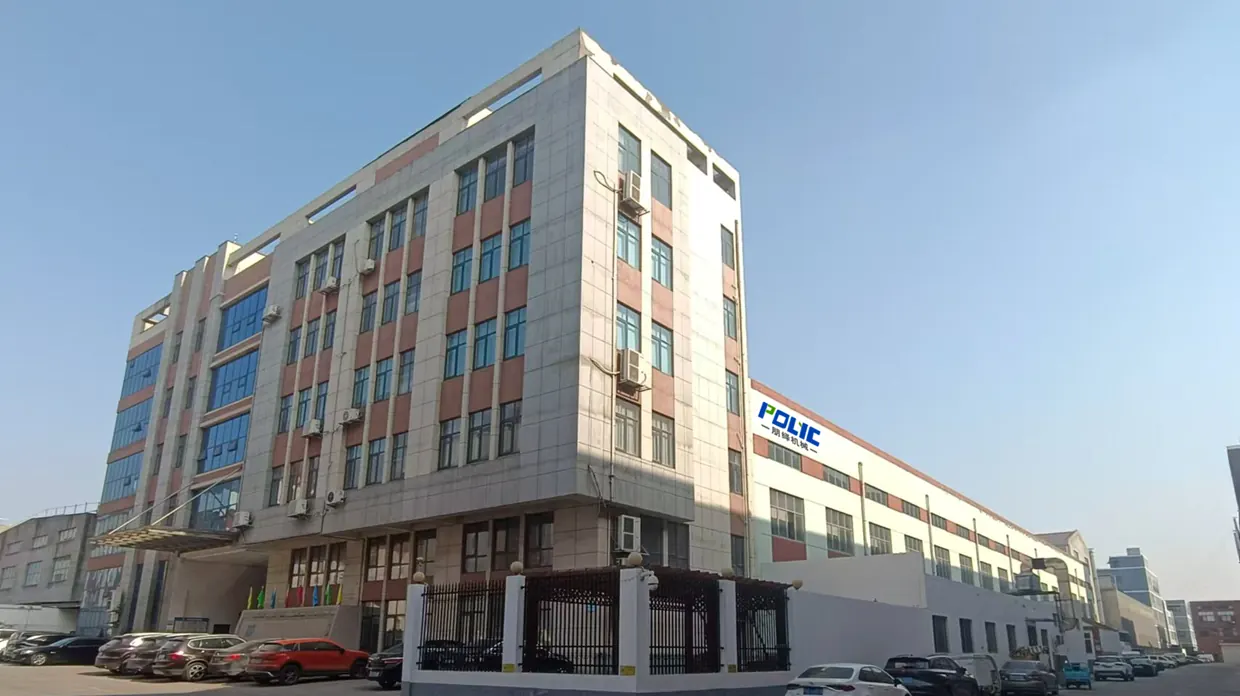
POLYC MACHINE develops and supplies wet-grinding, dispersion, mixing, reaction, filtration and filling equipment. The engineering team supports individual machines and integrated processing lines from process review through manufacturing and handover.
Fabrication capability covers machining, vessel construction, mechanical assembly, electrical integration and functional inspection. Equipment configuration is reviewed against material contact, abrasion, corrosion, contamination, cleaning and operating-safety requirements.
The portfolio covers the major unit operations used in coatings, inks, adhesives, battery materials, chemicals and advanced powder processing.
Complete systems can combine raw-material dosing, pre-dispersion, wet grinding, blending, vacuum processing, transfer, filtration, filling and controls. Layout and automation are adapted to available floor space, production sequence and operator workflow.
Project delivery can include approved drawings, agreed functional checks, installation guidance, commissioning coordination, operator training and spare-parts support. The standard catalog warranty is 3 years after shipment, with final terms defined by contract.
POLYC designs complete production lines matched to the material rheology. Low-viscosity coatings and inks use high-speed dispersers with horizontal bead mills. Medium-viscosity slurries such as wall plaster use double-shaft mixers. High-viscosity products such as adhesives, sealants and putty require planetary or butterfly double-shaft mixers with hydraulic presses.
The PZP disc series covers laboratory to production sizes for 5-10 micron grinding of coatings, gravure inks, flexographic inks and pigment dispersions.
| Model | Volume (L) | Motor Power (kW) | Peripheral Speed (m/s) |
|---|---|---|---|
| PZP15 | 15 | 15 | 10 |
| PZP30 | 30 | 30 | 10 |
| PZP60 | 60 | 37/45 | 10 |
| PZP100 | 100 | 55 | 11 |
| PZP150 | 150 | 75 | 11 |
| PZP300 | 300 | 110 | 12 |
The PZB pin-type series delivers high grinding intensity for inkjet ink, automotive paint, carbon black paste and ceramic inks, achieving fineness down to 200 nm.
| Model | Volume (L) | Motor Power (kW) | Peripheral Speed (m/s) |
|---|---|---|---|
| PZB2 | 2 | 5.5 | 12 |
| PZB6 | 6 | 15 | 14 |
| PZB10 | 10 | 18.5 | 14 |
| PZB20 | 20 | 30 | 14 |
| PZB30 | 30 | 45 | 14 |
| PZB60 | 60 | 75 | 15 |
| PZB150 | 150 | 160 | 16 |
The PZL series is designed for recirculation-mode nano grinding of low-to-medium viscosity products (up to 1000 mPa s). Small chamber volume means minimal product loss during color changeover, with constant power density across sizes.
| Model | Chamber Volume (L) | Motor Power (kW) | Batch Volume (L) |
|---|---|---|---|
| PZL02 | 0.2 | 2.2 | 0.3 - 2 |
| PZL1 | 1 | 5.5 | 1.2 - 8 |
| PZL2 | 2 | 7.5 | 3 - 20 |
| PZL5 | 6 | 22 | 10 - 50 |
| PZL10 | 10 | 30 | 50 - 100 |
| PZL15 | 15 | 45 | 100 - 200 |
| PZL20 | 20 | 55 | 200 - 500 |
For nano circulation and multi-pass operation, the SF pin mill accepts grinding media from about 0.2 to 3 mm and reaches fineness in the nanometer range across a wide viscosity window. Reference throughput for typical nano ink pastes is as follows:
The PUM chamber is designed for low-to-medium viscosity nano grinding. Product enters from the bottom, passes an outer and inner pin rotor, and the slurry recirculates internally before screenless centrifugal media separation.
Grinding bead diameter is selected from the maximum feed particle size. As a rule of thumb, media diameter should be 10-40 times the maximum feed particle size for coarse material, and 20-200 times for fine feeds. Too large a bead reduces fineness; too small a bead causes insufficient energy transfer and slow production.
| Feed Particle Size | Recommended Media Diameter | Typical Fineness After Milling |
|---|---|---|
| <= 30 um | 0.6 - 1.0 mm | <= 0.5 um |
| 30 - 100 um | 1.0 - 2.0 mm | 0.5 - 1.0 um |
| 100 - 300 um | 2.0 - 3.0 mm | 1.0 - 3.0 um |
| >= 300 um | 3.0 - 5.0 mm | 3.0 - 5.0 um |
Wetted parts are selected based on contamination risk, abrasion, corrosion and product purity requirements. Standard alloy construction suits general coatings; ceramic or PU liners are used when zero metal contamination is required.
For silicone sealants, adhesives, putties and offset inks, POLYC supplies butterfly double-shaft mixers, three-shaft mixers and planetary mixers with hydraulic press-out systems. Vessels can be forklift-movable with cooling jackets and vacuum covers.
The figures below are the same facts used in the site organisation data, so they can be cross-checked against the company history and the contact page. They describe the operation as it stands today rather than a projection.
| Item | Detail |
|---|---|
| Founded | 2006 |
| Head office | Shanghai, China - project engineering and export coordination |
| Manufacturing | Jiangyin, Jiangsu - fabrication, assembly and testing |
| Plant area | Over 9,000 m2 |
| Systems delivered | More than 8,000 |
| Countries served | Over 80 |
| Standard warranty | 3 years after shipment, with final terms defined by contract |
| Enquiry response | Targeted within 24 hours |
| Certification scope | Model-specific CE Machinery Directive attestations, confirmed for the quoted model |
Every project follows the same sequence, whether it is a single basket mill or a complete paint production line. The stages below describe what happens at each step and what the customer receives.
| Stage | What happens | Customer receives |
|---|---|---|
| Technical review | Material, solids, viscosity, particle size, temperature, capacity and utilities are reviewed | Recommended process route |
| Proposal and drawings | Equipment configuration, layout and utility requirements are prepared | Proposal drawings and equipment list |
| Configuration approval | Contact materials, controls, safety class, cleaning and automation are confirmed | Approved specification |
| Fabrication and assembly | Machining, vessel fabrication, mechanical assembly and electrical integration | Progress updates through build |
| Factory acceptance | Agreed functional checks and documentation are completed before shipment | Test records, manuals, drawings |
| Shipment and commissioning | Export packing, installation guidance, commissioning coordination and operator training | Operating line and spare-parts plan |
POLYC MACHINE was founded in 2006 in Shanghai as a machining and equipment fabrication business. That same year the Jiangyin manufacturing base and first in-house product line were established, moving the company from contract machining to complete equipment supply for coating and ink producers. The Shanghai company was formed in 2021 to coordinate international projects and exports, and equipment now runs in more than 80 countries.
CNC and conventional machining support shafts, rotors, housings and precision interfaces. Critical dimensions and fits are inspected before mechanical assembly.
Vessels, frames, platforms and pipework are fabricated around the selected materials, pressure conditions, cleaning needs and plant layout.
Mechanical assembly, electrical integration and agreed functional checks are completed before shipment. Test scope is documented for each project.
Basket, disc and pin-type bead mills cover flexible batch processing, productive micron grinding and contamination-controlled nano applications.
High-speed, vacuum and inline dispersers support powder wetting, de-agglomeration and preparation of stable feed for downstream milling.
Planetary, double-shaft, triple-shaft and ribbon mixers process high-viscosity pastes, slurries, sealants and dry powders.
POLYC MACHINE reviews product-contact materials, component configuration, dimensional checks and functional testing according to the agreed project scope. Documentation can include approved drawings, material information, inspection records, manuals and a factory acceptance checklist.
Verified model-specific documents include Basket Mill CE Machinery Directive Attestation M.2023.206.C.90346 and Bead Mill CE Machinery Directive Attestation M.2023.206.C.90347, both valid until 13 September 2028. Applicability must be confirmed for the quoted model. No general ISO 9001 or general ATEX certification is claimed on this page.
The Shanghai team coordinates international enquiries, technical review, documentation and shipment support for customers worldwide. Responses to web enquiries are targeted within 24 hours. Time-zone differences, project complexity and required engineering review can affect detailed proposal timing.
Support can include installation guidance, commissioning coordination, operator training and spare-parts planning. Site work, travel scope and local compliance responsibilities are agreed in the contract before dispatch.
Engineering begins with material and process data rather than a model number. The team reviews solids, viscosity, particle size, temperature, corrosion, contamination, cleaning, capacity and plant utilities before preparing a process route and layout.
The project can progress through technical clarification, proposal drawings, configuration approval, fabrication, factory acceptance testing and shipment. Site acceptance criteria should use the same measurement methods agreed during the design and trial stages.
FROM THE PRESENTATION


REPRESENTATIVE APPLICATIONS
A representative batch grinding route covering premixing, basket milling, cooling and acceptance testing.
Read full case →A contamination-controlled nano-milling scenario with closed transfer and temperature management.
Read full case →A planetary mixing and vacuum deaeration route for high-viscosity sealants and adhesives.
Read full case →RELATED EQUIPMENT
PZM Basket Mill: Submersible Wet Grinding for Paint, Ink, Pigment & Latex Production
View equipment →Horizontal pin-type bead mill for nanometer-range grinding, supporting media down to 0.2mm with centrifugal separation and force cooling.
View equipment →Planetary mixer for viscosities up to 1,500,000 cP, combining reaction, mixing and dispersion in one vessel. Working capacity: 2-1,000 L.
View equipment →Horizontal Ribbon Mixer for Uniform Dry Powder Blending
View equipment →FREQUENTLY ASKED QUESTIONS
Shanghai Polyc Technology Co., Ltd. coordinates projects and exports from Shanghai, with manufacturing and assembly support in Jiangyin, Jiangsu, China.
Typical industries include coatings, inks, adhesives, battery materials, ceramics, agrochemicals, pharmaceuticals, cosmetics, food and specialty chemicals.
Installation guidance, commissioning coordination, operator training and spare-parts support can be included according to the agreed project scope.
Yes. Product-contact materials, capacity, controls, cooling, seals, drives and process integration can be configured after engineering review.
Manufacturing and assembly take place at the Jiangyin plant in Jiangsu, which covers over 9,000 square metres and handles machining, vessel fabrication, assembly, electrical integration and functional testing. Project engineering and export coordination are based in Shanghai.
Model-specific CE Machinery Directive attestations are held for the basket mill (M.2023.206.C.90346) and the bead mill (M.2023.206.C.90347), both valid until 13 September 2028. Applicability must be confirmed for the quoted model. No general ISO 9001 or general ATEX certification is claimed on this page.
Provide the liquid system, pigment or solid type, solids content, viscosity, feed particle size, target fineness, batch size or hourly capacity, temperature limit, hazardous-area classification, available utilities and layout constraints. These inputs determine the process route and equipment configuration.
The standard catalog warranty is 3 years after shipment, with final terms defined by contract. Spare-parts planning and lifecycle technical support are discussed at handover.
Yes. Complete systems can combine raw-material dosing, pre-dispersion, wet grinding, blending, vacuum processing, transfer, filtration, filling and controls, with layout and automation adapted to the available floor space and operator workflow.
Spare-parts planning is agreed at handover, and lifecycle technical support continues after the warranty period. Responses to web enquiries are targeted within 24 hours; site work, travel scope and local compliance responsibilities are agreed in the contract before dispatch.
DISCUSS YOUR PROCESS
Share your material, capacity and quality targets with the POLYC MACHINE engineering team.
Talk to an engineer →