
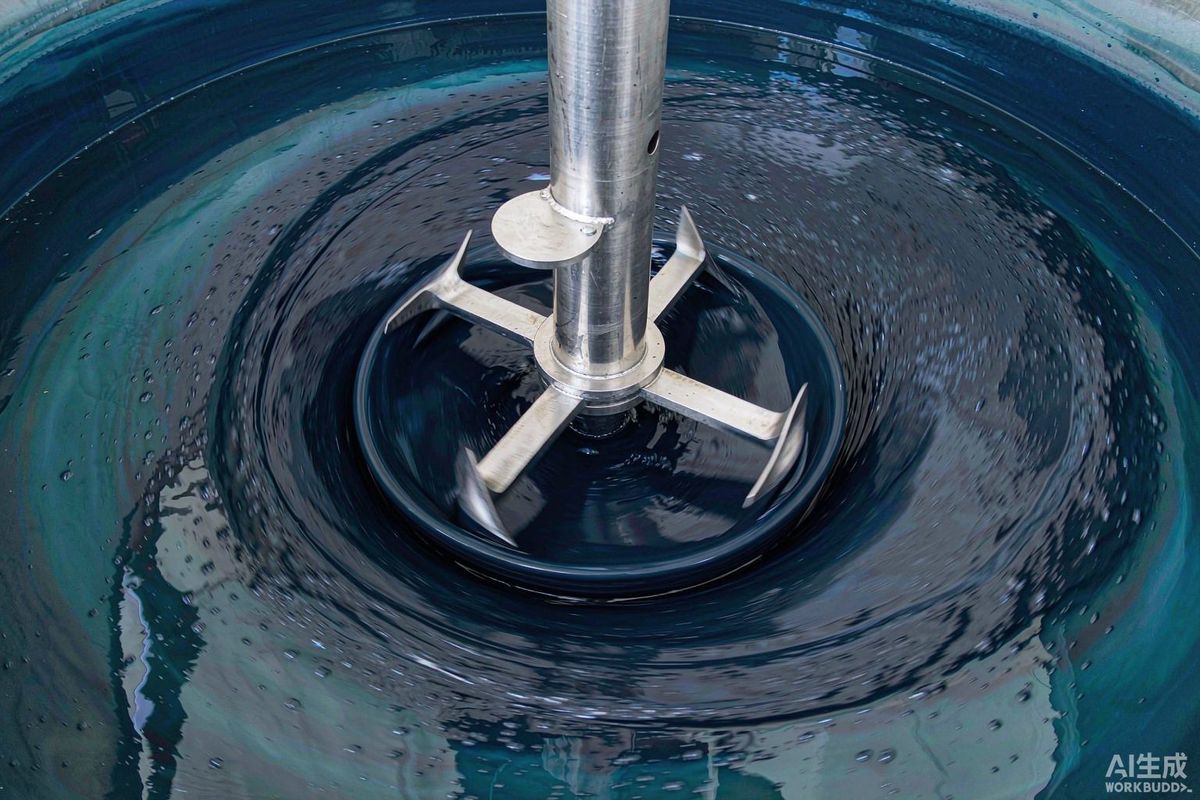
A high-speed disperser wets out and deagglomerates powder in a liquid using a toothed disc; it is the first step before fine grinding. When you compare a POLYC MACHINE high-speed disperser with a VMA Getzmann dispersion system, the comparison is about disc speed, batch control and where a bead mill enters the process. POLYC MACHINE has built dispersion and grinding equipment since 2001.
What a Dissolver Does
A dissolver spins a toothed disc at high tip speed to pull powder into the liquid, wet it and break soft agglomerates. It does not grind to a fine particle size — that is the bead mill's job. The dissolver sets up the feed so the mill can finish quickly and efficiently.
VMA Getzmann in Context
VMA Getzmann is a German manufacturer known for dissolvers and dispersion systems used in laboratories and production paint and ink plants. POLYC MACHINE is a focused Chinese manufacturer of dissolvers, basket mills, bead mills and complete grinding lines serving coatings, ink and fine-chemical producers in over 60 countries.
Both build the same class of machine; the buyer's job is to match disc design, batch control and support to the plant.
Disc Design and Tip Speed
Tip speed (m/s) at the disc edge sets how aggressively powder is wetted. POLYC MACHINE's platform high-speed disperser and single-shaft disperser use inverter-controlled toothed discs so tip speed is tuned to the product rather than fixed by a single pulley ratio.
| Aspect | POLYC disperser | Typical European disperser |
|---|---|---|
| Disc type | Toothed, variable speed | Toothed, variable speed |
| Tip speed control | Inverter-controlled | Inverter-controlled |
| Lift / travel | Hydraulic or pneumatic | Hydraulic or pneumatic |
| Vacuum option | Available | Available |
Batch Control and Vacuum
For solvent-borne systems, vacuum dispersion removes entrained air and improves gloss and appearance. POLYC MACHINE offers vacuum-capable dispersers such as the hydraulic-lifting shearing emulsifier for emulsification and dispersion duties where deaeration matters.
Viscosity Range
Dissolvers handle a wide viscosity band, but very high-viscosity pastes need a different tool — a high-viscosity mixer or double/triple-shaft unit. Matching the machine to viscosity prevents motor overload and poor wet-out.
Dissolver vs Bead Mill: The Two-Step Rule
The standard rule is: disperse first, then grind. A basket mill or bead mill takes the dispersed feed and refines particle size. Pairing a POLYC disperser with a POLYC bead mill into one line — for example a disperser + bead mill configuration — avoids interface bottlenecks that appear when mixing brands.
Lead Time and Support
European specialised lines can carry long build windows. POLYC MACHINE's in-house fabrication typically shortens delivery and keeps one accountable engineering contact, with a 3-year warranty on core grinding equipment under its standard terms.
Total Cost of Ownership
Beyond the purchase price, the costs that matter are energy per batch, disc and seal wear, downtime and spare-part speed. A focused supplier with direct engineering and stock usually wins on the variables that hit margin.
Which to Choose
- Choose a European dissolver brand if you specifically require that brand's local service footprint.
- Choose POLYC MACHINE for comparable dispersion performance, short lead time, direct engineering and easy integration into a turnkey grinding line.
POLYC MACHINE Dissolver Range
POLYC MACHINE supplies single-shaft, double-shaft and platform dispersers, plus basket mills and bead mills for plants that need both fast wet-out and fine grinding in one validated line.
Application Fit: When a Dissolver Is Enough
If your product is a pre-mix, a let-down, or a formulation that only needs deagglomeration and wet-out, a disperser alone is sufficient — adding a bead mill would be unnecessary cost. The trigger to add grinding is a measured particle-size spec (for example a d50 below a few micrometres) that the disc cannot reach.
For plants that later need fineness, POLYC MACHINE designs the high-speed disperser and bead mill as one line, so the upgrade is a connected step rather than a re-engineered process.
Frequently Asked Questions
Is a dissolver the same as a bead mill?
No. A dissolver wets out and deagglomerates powder using a toothed disc; it does not reach fine particle sizes. A bead mill uses grinding media to refine particle size. In most plants the dissolver runs first and the bead mill second.
Can a POLYC disperser replace a VMA Getzmann unit?
For standard coatings, ink and adhesive dispersion duties, yes — POLYC MACHINE dispersers offer variable-speed toothed discs, hydraulic lift and vacuum options comparable to European units, with shorter lead time and direct engineering support.
When do I need a bead mill after dispersion?
When your product needs a fine or sub-micron particle size that a dissolver cannot reach. After dispersing, pass the feed through a basket or bead mill. POLYC MACHINE sizes both steps together so the line meets your target d50 without a throughput bottleneck.