
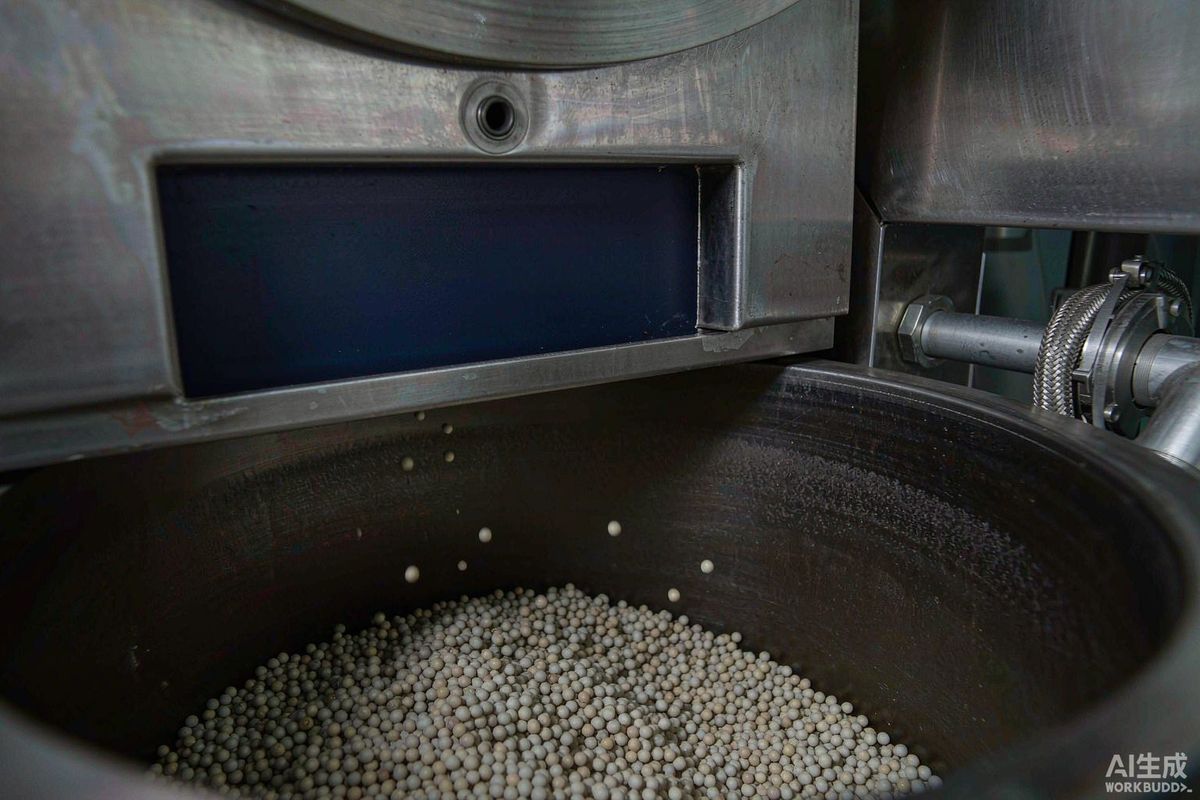
A bead mill agitates grinding media inside a closed chamber to reach fine particle sizes; when buyers weigh a POLYC MACHINE horizontal bead mill against a Netzsch system, the comparison should focus on agitation type, separator design and process fit rather than brand reputation alone. POLYC MACHINE has built grinding systems since 2001.
Netzsch in Context: A Specialist Wet-Grinding Brand
Netzsch is a German engineering group with a long history in wet grinding, known for disc and pin agitator bead mills used across paints, inks, ceramics and life-science applications. It is a benchmark name that many buyers name first. POLYC MACHINE is a focused manufacturer of bead mills, basket mills, dissolvers and complete grinding lines for the coatings, ink and fine-chemical industries.
The useful comparison is therefore not "legacy vs newcomer" but "which machine and supply model matches my product and my procurement reality."
Disc vs Pin Agitation — The Core Choice
Both suppliers offer disc and pin agitator designs, because both solve the same physics. A disc agitator is simple, robust and easy to service; a pin (rotor-stator) agitator gives intensive energy input for very fine and difficult products.
POLYC MACHINE's pin-type bead mill and vertical pin-type bead mill cover the high-intensity end, while the dynamic disc-type horizontal bead mill covers general coatings and ink duty. Choosing disc vs pin is a product decision, not a brand decision.
Separator and Media Handling
| Subsystem | POLYC bead mill | Typical European bead mill |
|---|---|---|
| Media separator | Screen or gap separator, tool-free | Screen or gap separator, tool-free |
| Media size range | 0.1–1.0 mm | 0.1–1.0 mm |
| Bead material | Zirconia or glass | Zirconia or glass |
| Chamber cooling | Jacketed, controlled temperature | Jacketed, controlled temperature |
The separator decides the smallest bead you can run and therefore your finest achievable size. Both approaches are mature; what varies is how quickly you can change media and clean between colours — a real concern in multi-product ink and paint plants.
Nano and Sub-Micron Milling
For sub-micron and nano dispersions, POLYC MACHINE offers the CeramicPU pin-type nano bead mill, built with ceramic-wetted parts to minimise contamination. This targets the same duty band as high-end European nano mills: pigments, conductive pastes and functional coatings.
Reaching a given d50 is a function of media density, residence time and cooling — variables you tune on the machine, independent of the nameplate.
Throughput and Specific Energy
Throughput scales with chamber volume, drive power and how many passes your product needs. POLYC MACHINE has delivered more than 8,000 grinding and dispersion systems to over 60 countries since 2001, so typical coatings and ink passes are well characterised. Specific energy (kWh/kg) to target fineness is best confirmed by a process test on your own feed.
Process Integration
A bead mill sits downstream of a high-speed disperser that wets out the powder. POLYC MACHINE links these into lines such as a turnkey ink production line, so the disperser, mill, filtration and filling are sized together rather than bought piecemeal.
Lead Time and Support
European specialist lines can carry extended build and logistics windows. POLYC MACHINE's in-house engineering and fabrication typically shorten delivery and keep one accountable contact for spares and commissioning. A 3-year warranty on core grinding equipment (per POLYC MACHINE standard terms) reduces lifecycle risk.
Total Cost of Ownership
Beyond purchase price, the costs that matter are media wear, seal and separator life, energy per tonne, downtime and spare-part speed. A focused supplier with direct engineering and stock usually wins on the variables that hit margin.
Which Buyer Should Choose Which
- Choose a European specialist line if your formulation is extreme (very high viscosity, exotic media) and you want the vendor's deepest application history.
- Choose POLYC MACHINE for standard to demanding coatings, ink and pigment duties where lead time, integration, support and warranty matter as much as the last micron.
How POLYC MACHINE Configures Your Mill
Every POLYC MACHINE mill is specified to your material, target fineness and capacity. Zirconia grinding media and chamber options are selected during process validation so the delivered machine meets the agreed d50, not a generic catalogue figure.
Application Examples: Inks, Paints and Pigments
For solvent and water-based printing inks, a horizontal bead mill with 0.3–0.6 mm zirconia beads typically reaches the fineness needed for gloss and colour strength. For decorative and industrial paints, a disc mill handles the higher solids loading without overloading the separator. POLYC MACHINE sizes the horizontal bead mill and media together so the installed power matches the duty rather than an oversized default.
In pigment concentrates, the disperser-to-mill interface decides batch time. Pairing a high-speed disperser with the mill in one validated line removes the guesswork and keeps the feed stable into the chamber — the single biggest lever on final throughput.
Frequently Asked Questions
Does POLYC MACHINE offer pin-type nano mills like Netzsch?
Yes. The CeramicPU pin-type nano bead mill is built for sub-micron and nano dispersions with ceramic-wetted parts to reduce contamination. It covers the same duty band as high-end European nano mills for pigments and functional coatings.
Can a POLYC bead mill hit sub-micron fineness?
Yes, for the relevant coatings, ink and pigment products. Fineness is set by media size, residence time, cooling and feed stability — all configurable on POLYC horizontal and pin-type bead mills. A process test on your material confirms the achievable d50.
How do POLYC lead times compare with European suppliers?
Because POLYC MACHINE engineers and builds the equipment in-house, delivery is generally shorter than for large European consolidated projects. Your project engineer confirms a dated schedule at quotation, including any turnkey line scope.